The best bucket for hot ashes is a sturdy metal ash bucket with a close-fitting lid, but no household bucket should be treated as a safe container for live embers. Let ashes cool completely before transferring them, then keep them covered and away from anything combustible. The Pure Garden and Wakeman 4.75-gallon buckets are best for larger ash loads; the BRIAN & DANY 2.6-gallon model suits buyers who want a broom and shovel together; and the smaller sets are better for compact hearths and limited storage space.
| Product | Best For | Capacity | Notable Feature |
|---|---|---|---|
| Pure Garden Metal Ash Bucket | More ash-storage capacity | 4.75 gallons | Lid, shovel, insulated raised bottom |
| BRIAN & DANY Mini Ash Bucket | Compact hearth cleanup | 1.3 gallons | Shovel and wooden broom |
| BRIAN & DANY Ash Bucket | Mid-size cleanup set | 2.6 gallons | Tool pocket and hand broom |
| Wakeman Metal Ash Bucket | Large bucket with tool storage | 4.75 gallons | Shovel pocket and secure lid |
| MYFIREPLACEDIRECT Mini Ash Bucket | Small spaces and mini fire pits | 1.5 gallons | Compact profile and included tools |
Pure Garden 4.75-Gallon Metal Ash Bucket

This 4.75-gallon metal bucket is best for households that regularly clean a wood stove, fireplace, or fire pit and want more room than a mini bucket provides. Its listed features include a lid, shovel, wooden-grip handle, and raised bottom with thermal insulation. The lid helps contain ash during movement, while the included shovel makes it easier to transfer cooled debris without needing a separate tool.
Choose this model if capacity and a simple included shovel matter more than a full cleaning kit. The product description says the raised bottom is intended to help protect floors, and recommends using it on stone, slate, or brick hearths. Its metal construction and lid make it relevant for ash handling, but they do not mean it is appropriate for storing live embers or placing on a combustible floor.
Limitation: A hand broom is not listed among the included accessories. The manufacturer’s surface guidance also means buyers should not assume the bucket is safe on every floor type.
BRIAN & DANY 1.3-Gallon Mini Ash Bucket
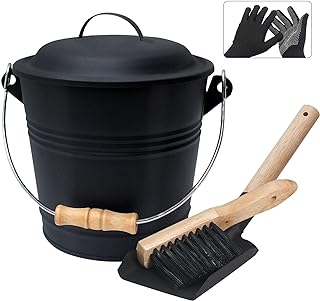
This compact set is best for people who want a small ash bucket with basic cleaning tools in one package. The listed accessories include a shovel and wooden broom, and the bucket has a tight-fitting lid and wooden grips on its metal handle. Its 1.3-gallon capacity is smaller than the two 4.75-gallon options, so it is better suited to modest cleanup needs than frequent large ash loads.
The product description gives an 8.5-by-8.5-inch mouth opening and a stated load capacity of up to 25.6 pounds. The wide opening can make scooping debris more convenient, while the lid helps keep ash from spilling during handling. A raised bottom is described as helping protect the floor from heat. Select this option when compact size and a broom-and-shovel set are priorities.
Limitation: The smaller capacity means it may need emptying more often than a larger model. As with any ash container, do not use its lid or raised base as a reason to handle or store ash that may still contain live embers.
BRIAN & DANY 2.6-Gallon Ash Bucket

This 2.6-gallon bucket is best for buyers who want more capacity than a mini model but do not need a 4.75-gallon container. The set includes a shovel and hand broom, and its side pocket holds the shovel with the bucket. A tight-fitting lid is designed to help prevent ash from spilling, and wooden grips are fitted to the steel handles.
The listed opening measures 11.1 by 11.1 inches, and the product description states a load capacity of up to 25.6 pounds. This combination of a wider opening, mid-size capacity, and included hand tools makes it a practical choice for routine hearth cleanup. Choose it if you want the tools stored with the bucket and prefer a middle ground between compact storage and higher capacity.
Limitation: Although the bucket has a raised bottom described as helping protect floors, the supplied features do not specify a safe surface for every use. Keep it on an appropriate noncombustible hearth surface and only transfer fully cooled ash.
Wakeman 4.75-Gallon Ash Bucket And Shovel

The Wakeman is best for buyers who want a large-capacity bucket and a shovel that stores in a dedicated pocket on the bucket. It holds 4.75 gallons and has a tight-fitting lid. The product description says the lid helps keep ash and hot embers inside during cleanup; for safety, however, treat the bucket as a container for fully cooled ash rather than a way to carry live embers.
Its raised bottom and thermal insulation are described as helping reduce heat transfer to the floor. The listing specifically advises keeping the bucket on a hearth, stone, slate, or brick because the surface area can still become hot. Choose this model over a basic bucket if integrated shovel storage matters, or over a mini bucket if you need more capacity.
Limitation: The raised base does not make every floor suitable. Follow the listed surface guidance, and do not place the bucket on carpeting, wood, or other combustible material.
MYFIREPLACEDIRECT 1.5-Gallon Mini Ash Bucket

This 1.5-gallon model is best for buyers with a small hearth, mini fire pit, or limited storage space. The listed measurements are 6.3 by 8.5 by 12.6 inches. It comes with a lid, shovel, and hand broom, and the product description identifies fireplaces, fire pits, hearths, and grills as potential uses. Its compact size can also suit people who want a small container for fireplace accessories when it is not being used for ash.
Compared with the 1.3-gallon BRIAN & DANY mini bucket, this model has a slightly larger stated capacity. Its compact footprint is the main reason to choose it over the 2.6- and 4.75-gallon alternatives. Consider it if you clean up smaller amounts and want the included tools without dedicating much room to storage.
Limitation: The product details do not give a load-capacity figure or describe an insulated raised base. Do not infer that it can be placed on a heat-sensitive surface or used to transport burning coals.
Buying Guide: How To Choose An Ash Bucket
What makes a bucket suitable for ash?
A purpose-built ash bucket is generally a metal container with a lid and a handle. Metal construction is suited to ash cleanup, while a fitted lid can help contain dust and reduce spills as you move the bucket. Some models also include a shovel, broom, or tool-storage pocket. These features improve convenience, but they do not eliminate fire risk or make a bucket suitable for live coals.
Check the product’s actual listed capacity, opening size, included tools, and surface instructions. A wider opening may make scooping easier, while a smaller profile may fit more conveniently beside a stove. If floor protection matters, look for explicit information about a raised or insulated base and follow any limitations given by the manufacturer.
How large should an ash bucket be?
Choose capacity based on how much ash you expect to collect and how often you plan to empty the container. The 1.3- and 1.5-gallon options are better for small cleanup loads and tight spaces. The 2.6-gallon bucket offers a middle capacity, while the 4.75-gallon models hold more between emptying. A larger bucket can be more convenient, but it may take up more room and become heavier when filled.
Do not select a bucket based only on its gallon rating. Consider the opening dimensions, storage location, and whether you can lift and carry it comfortably when loaded. Follow the stated load limit when one is provided, and avoid filling any container so heavily that it is difficult to move securely.
Is a lid or tool storage more important?
A lid helps keep ash contained and can limit mess during handling. A shovel is useful for transferring debris, and a hand broom can help collect fine ash around the hearth. A side pocket is valuable if you want to keep the shovel with the bucket instead of storing it separately. For a simple setup, the Pure Garden includes a shovel and lid; the BRIAN & DANY sets and MYFIREPLACEDIRECT model list both a shovel and broom.
Choose the accessory arrangement that matches your cleaning routine. If you already own a broom, an extra one may not be useful. If tools tend to get misplaced, a bucket with a dedicated shovel pocket can keep the main tool close at hand.
Where should you place the bucket?
Use the surface guidance for the specific model. The Pure Garden listing recommends stone, slate, or brick hearths. The Wakeman listing also says to keep it on a hearth, stone, slate, or brick because the surface area may still become hot. A raised bottom or thermal insulation should not be treated as proof that any floor is safe.
Keep ash containers away from combustible materials, including wood, paper, and dry leaves. Place the bucket in a location where children and pets cannot knock it over, and avoid blocking an exit or walkway. Check the bucket and lid before use for damage that could interfere with secure handling.
How should hot ashes be handled safely?
Do not assume that ashes are cold just because a fire appears to be out. Embers can remain hot beneath the surface for an extended period. Let ashes cool completely before transferring them to a storage bucket. If local fire-safety guidance recommends a specific cooling or disposal procedure, follow that guidance.
Use a metal shovel, move ash carefully to limit dust, and close the lid after the ash is inside. Keep the container outdoors or in another safe location away from combustible materials while the ash cools, following local recommendations. Do not put ashes in plastic, cardboard, or another combustible container, and do not dispose of them in household trash while they may still be hot.
Frequently Asked Questions
Can you put hot ashes in a metal bucket?
Metal is more appropriate for ash handling than a combustible container, but a metal bucket is not a guarantee against fire or burns. Let ashes cool completely before transferring them, and follow the bucket’s placement instructions. Do not use these products as containers for live embers.
Do ash buckets need lids?
A lid is useful because it helps contain ash and reduce spills while the bucket is being moved. It does not make hot ash safe to handle or remove the need to keep the container away from combustible materials.
Which ash bucket is best for a small fireplace?
A 1.3- or 1.5-gallon mini bucket is generally the better fit for limited space or smaller cleanup loads. Choose between them based on the listed dimensions and included tools. For larger ash amounts, consider a 2.6- or 4.75-gallon option.
Can an ash bucket sit on a wood floor?
Do not assume it is safe to place an ash bucket on wood. The Wakeman listing warns that the surface area can still become hot and recommends a hearth, stone, slate, or brick. Follow the specific product’s surface guidance and keep the bucket away from combustible flooring.
What tools are useful for cleaning a fireplace?
A shovel helps transfer ash into the bucket, while a hand broom can collect loose debris around the hearth. Some buckets include both tools, while others list only a shovel. A tool pocket can keep the shovel stored with the bucket.