The best eco-friendly wood stove choice depends on whether you need a home-stove accessory or a portable outdoor burner. The JossaColar fan is best for moving heat from an existing wood stove around a room, while the EcoZoom Rocket Stove is better for outdoor cooking with wood or charcoal. The AVOFOREST and GAOMON models are designed for tent heating and cooking; the Kuvik is best for ultralight backpacking. None of these listings is a complete indoor home-heating stove, so consider intended use, fuel, ventilation, and emissions before buying.
| Product | Best suited for | Key feature |
|---|---|---|
| JossaColar Wood Stove Fan | Circulating heat from an existing stove | Heat-powered operation |
| AVOFOREST Hot Tent Stove | Tent heating and cooking | Detachable chimney sections |
| EcoZoom Rocket Stove | Outdoor cooking | Wood and charcoal fuel options |
| GAOMON Portable Wood Stove | Camping and tent use | Folding legs and chimney damper |
| Kuvik Titanium Wood Stove | Ultralight backpacking | Collapses nearly flat |
JossaColar Heat-Powered Wood Stove Fan

The JossaColar is a stove accessory rather than a wood-burning stove. It uses heat from a wood stove, heater, or fireplace to power its fan, so it does not require batteries. Its curved aluminum fan blade is intended to spread warmth around a room, and the package includes a magnetic thermometer.
Best for: People who already have a wood-burning stove and want a non-electric way to circulate its heat. It was selected because it can complement an existing stove without adding another fuel source or requiring a battery-powered fan.
Limitation: This product does not generate heat or replace a stove. Its ability to circulate warmth does not establish that a stove burns cleaner or produces fewer emissions. Check that it is suitable for the stove surface and operating conditions before use.
AVOFOREST Portable Hot Tent Stove
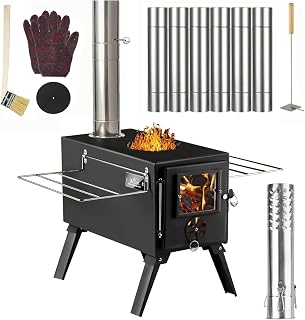
This portable wood-burning stove is designed for outdoor tent heating and cooking, including activities such as camping, hunting, and ice fishing. Its chimney is made from seven detachable sections that can be assembled to a desired height. A chimney pipe includes a damper for managing the flame and burn rate, while a viewing window lets users observe the fire.
Best for: Campers who need a stove with a segmented chimney and visible firebox. The iron stove body and stainless-steel chimney sections suit buyers looking for a portable outdoor setup rather than a permanent indoor appliance.
Limitation: The listing calls for opening the chimney damper so smoke can escape. This is a tent stove, not a listed indoor home-heating unit; use only in an appropriate outdoor shelter setup and follow the manufacturer’s operating and ventilation instructions.
EcoZoom Dual-Fuel Rocket Stove

The EcoZoom Rocket Stove is a portable outdoor cooker that burns charcoal or biomass such as twigs, branches, and wood. Its insulated body is designed to transfer heat to cookware, and the three-pronged cast-iron top accommodates flat- or rounded-bottom pots and pans. The product description also says the stable cylindrical design supports heavy cookware, including cast-iron pots and Dutch ovens.
Best for: Outdoor cooks who want to use available biomass or charcoal and need a stove top suited to different cookware. It stands out among these choices for its stated dual-fuel use and cooking-focused design.
Limitation: This is a cooker, not a tent-heating system or a household wood stove. Burning wood or charcoal still produces smoke and combustion emissions, and the listing does not provide emissions data or establish that the stove is suitable for indoor use.
GAOMON Portable Tent Wood Stove

The GAOMON portable stove is intended for camping, picnics, and tent use. It has folding tripod legs for transport, side storage racks that also serve as handles, a high-temperature-resistant viewing glass, and a chimney section with a damper to adjust the flame. The listed construction is iron with a high-temperature coating.
Best for: Campers who want a portable tent stove with foldable legs and a visible fire. It is a better fit than the backpacking-focused Kuvik model when the buyer prioritizes a tent-stove format and flame adjustment over minimal packed thickness.
Limitation: The listing does not specify a complete chimney length, emissions performance, or indoor-use approval. Confirm setup requirements for the tent and maintain proper smoke ventilation; do not treat a portable tent stove as a substitute for a residential heating appliance.
Kuvik Ultralight Titanium Wood Stove
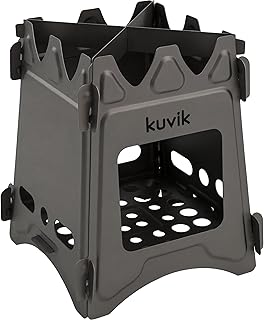
The Kuvik is a compact, freestanding backpacking stove made from Grade-1 titanium. The listing gives its assembled dimensions as 6.25 by 5 by 5 inches and its weight as 6.8 ounces; it collapses to 0.2 inches thick and includes a carrying case. It burns natural materials such as dry twigs, sticks, grass, roots, or bark gathered around a campsite.
Best for: Backpackers seeking a lightweight, collapsible stove that uses campsite biomass rather than a fuel canister. The flat-packed design and included case make it the most compact option in this selection.
Limitation: Its small cooking platform and biomass fuel requirement make it a different choice from a tent heater or a stove for heavy cookware. Collecting wood may be restricted at some campsites, so check local fire and fuel-gathering rules before relying on natural fuel.
Buying Guide: How To Choose An Eco-Friendly Wood Stove
“Eco-friendly” can refer to fuel sourcing, fuel efficiency, emissions, or reduced reliance on disposable fuel containers. These products serve different purposes, and the supplied product details do not establish emissions rates or certifications. Choose by intended use first, then evaluate fuel and operating requirements. A portable wood burner is not automatically cleaner than another stove simply because it uses wood.
Do you need a home-heating stove or an outdoor cooker?
Start by separating a complete heating appliance from an accessory or portable outdoor stove. The JossaColar is a fan for an existing stove. The EcoZoom is an outdoor cooking device. The AVOFOREST and GAOMON products are tent stoves, and the Kuvik is a small backpacking stove. None of the product descriptions supplied here identifies a complete residential wood stove for installation in a home.
For permanent home heating, look for a purpose-built appliance and verify its installation requirements, emissions information, and compliance with applicable local rules. A fan or camping stove should not be used as a replacement for an appropriately installed home-heating system.
Which fuel makes sense for your use?
The EcoZoom accepts charcoal and biomass such as twigs and branches. The Kuvik uses small natural materials found around a campsite. The AVOFOREST and GAOMON are described as wood-burning stoves. The JossaColar does not burn fuel itself; it uses heat from an existing stove to power its fan.
Fuel availability does not guarantee environmental benefit. Consider whether wood can be sourced responsibly, whether gathering it is permitted, and whether the appliance burns efficiently under the conditions in which you will use it. Follow any local fire restrictions, especially during dry or high-risk periods.
How important are portability and packed size?
For backpacking, the Kuvik’s 6.8-ounce listed weight and 0.2-inch collapsed thickness make portability its central advantage. The AVOFOREST uses detachable chimney sections for transport, while the GAOMON has folding legs. The EcoZoom is portable but is designed to support a range of cookware, including heavy pots. The JossaColar is a room-use accessory for a stove already in place.
Compare the full system, not just the stove body. Chimney sections, cookware, fuel, and other equipment can affect how practical a portable setup is to carry and assemble. Check each product’s included components and dimensions before deciding.
What should you check for safe operation?
Wood combustion creates smoke and requires appropriate ventilation. Follow the specific manufacturer instructions for assembly, chimney placement, dampers, clearances, and operation. For tent stoves, confirm that the tent and its stove jack or other required setup are appropriate for the equipment. Do not assume that a viewing window, a damper, or a heat-resistant material makes a stove safe in every environment.
For any home installation, consult qualified professionals and applicable building, fire, and air-quality requirements. Portable camping products should be used only as intended and should not be treated as residential appliances based on their ability to produce heat.
Can a stove fan make wood heating more eco-friendly?
A heat-powered fan can move warmth from an existing stove around a room without using batteries, according to the JossaColar listing. That describes how the fan is powered; it does not prove that the stove burns less wood, lowers emissions, or improves overall efficiency. Consider it a heat-circulation accessory, not an emissions-control device.
Frequently Asked Questions
What is the best eco-friendly wood stove in this selection?
There is no single best option for every use. The EcoZoom is the outdoor cooking choice for buyers seeking a stove that accepts wood or charcoal. The Kuvik is the most backpacking-focused option, and the JossaColar is an accessory for circulating heat from an existing wood stove.
Are these products suitable for heating a house?
The listed products do not include a complete residential wood-heating appliance. The JossaColar is a fan accessory, while the other stoves are described for outdoor cooking, camping, tent use, or backpacking. Check residential requirements before selecting equipment for home heating.
Which option is best for backpacking?
The Kuvik is the most clearly suited to backpacking. Its listing specifies a 6.8-ounce weight, a compact titanium design, and a collapse thickness of 0.2 inches. It uses natural campsite materials as fuel, subject to local rules and availability.
Which stove can burn charcoal as well as wood?
The EcoZoom Rocket Stove is listed as a dual-fuel model for charcoal and wood or other biomass, including twigs and branches. The supplied details do not specify the same charcoal capability for the other stove models.
Does a heat-powered stove fan reduce emissions?
The JossaColar fan uses heat from a stove to power its fan and does not require batteries. Its listed features do not provide emissions data or state that the fan reduces fuel use or pollution.
What should I check before using a wood stove in a tent?
Check the stove’s instructions for chimney assembly, damper settings, ventilation, and the required shelter setup. The AVOFOREST listing specifically says to open its chimney damper to allow smoke to escape. Follow manufacturer guidance and local fire restrictions, and do not use a tent stove as an indoor home-heating appliance.