The best exhaust fan draft blocker is a correctly sized backdraft damper that opens when the fan runs and closes when airflow stops. For a standard 4-inch duct, the Kikerike is a simple metal insert, while MIVIDE offers a two-pack. Deflecto is a plastic gravity damper with stated dryer-vent and bathroom-fan uses. For larger ducts, consider the 6-inch Kikerike; for more duct-size flexibility, the BRDUROBLA is listed for several hose and pipe sizes. Check duct dimensions and installation orientation before choosing.
| Product | Best suited for | Listed size or feature |
|---|---|---|
| Kikerike 4-Inch Damper | A single 4-inch ventilation duct | Galvanized-steel body, aluminum flaps |
| MIVIDE 2-Pack | Two 4-inch duct runs | Two inserts; galvanized steel |
| Deflecto Inline Damper | 4-inch residential venting | Plastic gravity flap |
| Kikerike 6-Inch Damper | A single 6-inch ventilation duct | Galvanized-steel body, aluminum flaps |
| BRDUROBLA 3- or 4-Inch Damper | Listed hose or pipe size options | Rubber seal; automatic flap |
Kikerike 4-Inch Backdraft Damper
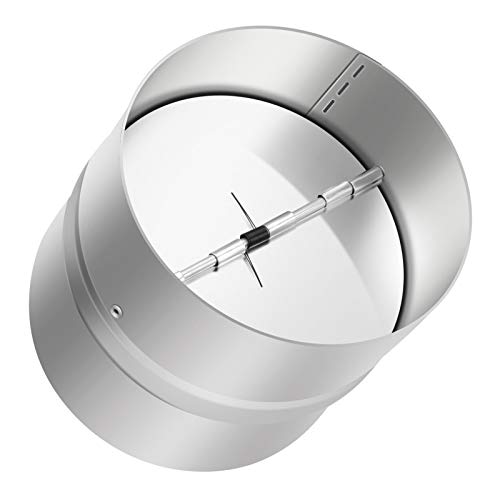
Best for: A buyer with a compatible 4-inch ventilation duct who wants a metal inline draft blocker. This model has a galvanized-steel body and aluminum flap leaves. Its intended function is to limit air from recirculating through the duct when a fan is off.
The insert is pushed into the ventilation pipe until it is seated. The product instructions specify that the spring should be horizontal for horizontal installation; they also say to position the spring appropriately for vertical installation so the flap can open and close. Check the damper’s orientation and the duct’s fit before installation.
Why it was selected: It is a straightforward single-damper option for a common 4-inch duct size, with materials and installation guidance stated in the product details. Limitation: It is listed for a 4-inch duct, so it is not the right pick for a 6-inch opening or another size without a suitable transition.
MIVIDE 4-Inch Damper Two-Pack

Best for: Buyers who need draft blockers for two compatible 4-inch duct runs. The listing gives a 100 mm, or 4-inch, diameter and a length of 88 mm, or 3.5 inches. It specifies galvanized-steel dampers with stainless-steel axis and spring components.
The product is described for ducting in range hoods, bathroom fans, and kitchen fans. Installation involves inserting the damper into the ventilation pipe until it stops. The listing says the blades should open in the direction of outgoing airflow and calls for a horizontal spring position in horizontal installations.
Why it was selected: The two-piece pack is useful when one fan system has two runs or when two compatible ducts need dampers. Its stated dimensions help buyers compare it with duct measurements. Limitation: Confirm both the diameter and the available duct depth before ordering; this listing specifically describes 4-inch inserts.
Deflecto 4-Inch Gravity Damper

Best for: A buyer looking for a 4-inch inline damper with a gravity-operated flap. Deflecto describes this model for dryer vents, bathroom exhaust fans, and other residential venting systems. The flap is designed to open when the dryer or exhaust fan is operating and close when airflow stops.
The product is made of plastic and measures 5 inches wide by 5 inches high, with a stated depth of 2.5 inches. Its listed 4-inch opening is intended to connect with standard 4-inch ducting. The listing says the damper can be installed inline between ductwork and an exterior hood.
Why it was selected: It provides a clearly described gravity-flap alternative to metal insert dampers and names several residential uses. Limitation: Its plastic construction and stated dimensions may not suit every installation. Verify the duct connection and available space, particularly when replacing an existing component.
Kikerike 6-Inch Backdraft Damper

Best for: A buyer whose exhaust fan system uses a compatible 6-inch duct. This model has a galvanized-steel body and aluminum flap leaves, and is designed to reduce air recirculation when a fan is not running.
Like the 4-inch version, it is installed by pushing the damper into the ventilation pipe. The product instructions address spring position for horizontal and vertical installations, with the aim of allowing the flaps to open and close properly. Follow the supplied orientation guidance rather than assuming the damper can be installed in any position.
Why it was selected: It gives buyers a same-style option for a larger stated duct size, which helps avoid choosing a 4-inch insert for a 6-inch system. Limitation: The listed size is 6 inches. Measure the duct and confirm the connection type before purchase; this product is not presented as an adjustable-size model.
BRDUROBLA Adjustable-Size Draft Damper

Best for: Buyers comparing a damper for listed 3-inch or 4-inch hose and pipe applications. The product details describe connections for 80 or 100 mm hose and 75 or 110 mm PVC pipe. They also mention bathroom, attic, garage, air-conditioning, fan, extractor-hood, and ventilation uses.
The flap opens and closes automatically to allow one-way airflow. The listing says an inner rubber seal is intended to improve tightness and reduce noise. It describes the unit as suitable for insertion into exhaust hose or PVC and notes that duct-size selection is important.
Why it was selected: It is a useful comparison for buyers working with listed hose or PVC sizes rather than choosing solely by a nominal duct label. Limitation: The size options and connection measurements need careful checking against the actual duct. Do not assume one configuration fits every 3-inch or 4-inch system.
Buying Guide: How to Choose an Exhaust Fan Draft Blocker
What does an exhaust fan draft blocker do?
A draft blocker for an exhaust fan is generally a backdraft damper. Its flap opens when the fan pushes air toward the exterior and closes when airflow stops. The goal is to reduce reverse airflow through the duct. Depending on the installation, a closed damper may also help limit drafts and the entry of outdoor debris. It does not replace a functioning fan or correct other ventilation problems.
How do I choose the correct size?
Start by measuring the duct’s inside diameter and checking the product’s stated dimensions. A nominal 4-inch damper is not interchangeable with a 6-inch model unless the system has an appropriate transition and the installation allows it. Also compare the damper’s length, depth, and connection style with the space available in the duct run.
- Measure the duct opening rather than relying only on the fan’s advertised size.
- Check whether the damper inserts into a pipe or connects between duct sections.
- For hose or PVC applications, compare the listed millimeter and inch measurements.
- Confirm that the installed flap has room to move without obstruction.
Should I choose a spring damper or a gravity damper?
These product listings describe different flap designs. The Kikerike and MIVIDE models include spring-related installation instructions, while the Deflecto listing identifies a gravity-balanced flap. Choose according to the product’s instructions and the duct orientation. A damper’s ability to open and close depends on a suitable installation, unobstructed airflow, and matching connections. Do not assume a model designed for one arrangement will perform the same way in another.
Which material is the better fit?
The Kikerike and MIVIDE dampers are described with galvanized-steel components; Kikerike specifies aluminum flap leaves, while MIVIDE specifies stainless-steel axis and spring components. Deflecto is made of plastic. Compare the material descriptions with the location and connection requirements of your system. Product details alone do not establish that one material is suitable for every environment or use.
What should I check before installation?
- Airflow direction: Install the damper so it opens in the direction air exits the building.
- Orientation: Follow the manufacturer’s guidance for spring position and horizontal or vertical mounting.
- Fit: Make sure the damper sits securely and does not leave an unintended gap around the duct connection.
- Access: Consider whether the flap can be inspected and cleaned if needed.
- Vent system: Confirm that the chosen damper is appropriate for the specific fan and duct application.
If the damper restricts airflow, rattles, or fails to close, check for an incorrect size, poor orientation, obstruction, or a connection problem. For a permanent installation or an uncertain duct setup, consult a qualified ventilation professional.
Frequently Asked Questions
Can I put a draft blocker in a bathroom exhaust fan duct?
Yes, several listed products are described for bathroom exhaust systems. Choose a damper that matches the duct dimensions and installation arrangement, and install it in the outgoing airflow direction.
Will a backdraft damper stop all cold air?
A backdraft damper is designed to close when airflow stops and may help reduce drafts, but the listed product information does not guarantee that it will eliminate all cold air. Gaps, duct connections, and other parts of the vent system can also affect air leakage.
Can I use a 4-inch damper in a 6-inch duct?
Not as a direct size match. Use a damper that matches the duct, or confirm that a properly sized transition is suitable for the system. Reducing duct size can affect airflow.
Does a draft blocker need to be cleaned?
Check the damper periodically for dust or debris that could prevent the flap from moving freely. Follow the product instructions and avoid damaging the flap or spring during inspection.
Is an inline damper the same as an exterior vent cover?
No. An inline damper is installed within the duct run, while an exterior vent cover is fitted at the outlet. Some systems may use both, but each component has a different location and role.