When selecting a heat pump water heater, look for high energy efficiency, reliable hot water delivery, and compatibility with your home. This guide highlights five strong options that balance efficiency and capacity for typical American households. Best for busy families, houses with 3–4 people, and spaces where electricity is readily available. The following table summarizes key points to help you compare at a glance.
| Product | Capacity | Estimated Efficiency | Best For |
|---|---|---|---|
| Rinnai REHP50 Electric Heat Pump Water Heater | 50 Gallon | UEF 3.75, Energy Star | High demand households; energy-savings seekers |
| Senville 50 Gallon Hybrid | 50 Gallon | UEF 3.75 | Medium-to-large homes; energy savings |
| ACiQ Electric Residential Hybrid 50 Gallon | 50 Gallon | Hybrid efficiency; energy-saving | Basement/garage installs; indoor-friendly |
| AQUASTRONG Pool Heat Pump (Pool Heater, 3,000 gal) | 3,000 Gallons pool | High COP; energy efficient | Pool heating and year-round comfort |
| GE Appliances 30 Gallon Electric Water Heater | 30 Gallon | DOE-first-hour rating up to 53 gallons | Compact spaces; basic hot water |
Rinnai REHP50 Electric Heat Pump Water Heater — 50 Gallon

Best for high-demand households with energy-savings goals. This 50-gallon unit extracts heat from ambient air to deliver hot water with a Uniform Energy Factor (UEF) of 3.75 and is Energy Star certified. It can deliver up to 73 gallons in the first hour, making it suitable for families of 3–4. It also supports Demand-Response programs to reduce energy usage during peak utility hours. A potential limitation is space requirements for installation, as heat pump systems perform best in stable indoor temperatures.
Senville 50 Gallon Hybrid Heat Pump Electric Water Heater
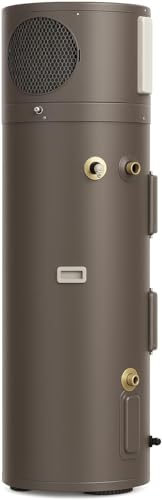
Better for mid-to-large homes seeking strong energy savings. The Senville hybrid uses heat pump technology to cut electricity use by up to 70% compared to standard electric water heaters and carries a 3.75 UEF with a 69-gallon first-hour rating. It is well suited for basements or garages with stable indoor temperatures. A caution: performance can depend on ambient air conditions and placement within the home.
ACiQ Electric 50 Gallon Residential Hybrid

Best for indoor installations and spaces kept at moderate temperatures. This 50-gallon unit emphasizes quiet operation and suitability for basements or garages. It requires adequate air circulation and indoor temperatures that sustain efficient heat extraction. If your environment experiences extreme cold or drafts, consider placement adjustments to avoid reduced performance.
AQUASTRONG Pool Heat Pump — 3,000 Gallons Pool

Best for outdoor pool heating and extended swim seasons. This pool heat pump features a high-output 12,000 BTU heating module and a COP of 5.5, delivering significant energy savings versus electric resistance heating. It maintains temperature with ±2°F accuracy, a key factor for consistent pool comfort. Limitation: designed for pools up to around 3,000 gallons; not a residential domestic water heater.
GE Appliances 30 Gallon Electric Water Heater

Best for compact spaces needing reliable hot water for 1–3 people. The GE 30-gallon unit delivers up to 53 gallons in the first hour, per its DOE rating, making it a solid choice where space is at a premium. This is a traditional electric water heater rather than a heat pump model, so expect higher operating costs compared to hybrid units in energy-conscious homes. Consider this if heat-pump options are constrained by space or airflow.
Buying Guide
What makes a heat pump water heater energy efficient?
Heat pump water heaters use ambient heat from the surrounding air to heat water, offering higher efficiency than traditional electric tanks. Look for Energy Star certification and a high Uniform Energy Factor (UEF). A higher UEF generally means lower operating costs over time.
How much hot water do you need?
Capacity matters more than speed alone. 40–50 gallon tanks fit typical families of 3–4, while smaller households might manage with 30–40 gallons. If your home has high concurrent hot-water use (showers, laundry, dishwasher), choose a larger first-hour rating (FHR) and consider a model that supports Demand-Response for utility savings.
Where should you install a heat pump water heater?
Most heat pump units perform best indoors in spaces with stable temperatures, like basements or garages. Avoid unheated spaces that dip below 37°F, which can hinder performance and efficiency. Adequate clearance around the unit improves airflow and heat transfer.
What about pool heat pumps?
Pool heat pumps are specialized for heating pool water, not domestic hot water. They can be highly efficient for extending pool seasons but are not substitutes for household water heating. If you need pool heating, ensure the unit is sized for your pool volume and climate.
Installation and safety considerations
Ensure a proper electrical supply (mostly 240V for larger units) and appropriate clearances. Regular maintenance, including checking the anode rod and insulating valves, helps prolong efficiency. Consider utility programs that may offer lower rates during off-peak hours when Demand-Response features are available.
FAQ
- Do heat pump water heaters require a lot of space? They need room for airflow and servicing; most installations fit in standard utility spaces, basements, or garages.
- Are heat pump water heaters more expensive to buy? Upfront costs are higher, but long-term energy savings can offset the price over time.
- Can I install a heat pump water heater myself? Professional installation is recommended to ensure proper electrical connections and venting (if applicable).
- Will cold climates affect performance? In very cold spaces, performance may drop; place the unit where ambient temperatures stay moderate.
- Should I choose a hybrid or an all-electric heat pump model? Hybrid models typically deliver higher efficiency and faster hot water delivery in larger homes, while all-electric variants may be adequate for smaller households.
- Can heat pump water heaters handle high hot-water demand? Some units offer high first-hour delivery (FHR) and Demand-Response features; review specifications to match your household’s peak usage.