Shopping for a hot water demand system means prioritizing quick hot water, space efficiency, and safety. This guide highlights five top options suited to apartments, small homes, and renovation projects where on-demand heating saves space and energy. Each product shows clear benefits, who it’s best for, and a practical caveat to consider before buying. The following summaries help buyers compare performance, installation needs, and typical use cases at a glance.
| Product | Best For | Key Benefit |
|---|---|---|
| 110V Tankless Electric, 3000W, Under-Sink | Small kitchens or bathrooms needing instant hot water | Compact, LED display, quick heat-up |
| Ranein Propane Gas Tankless, 3.6 GPM | Whole-home use with multiple outlets | Endless hot water for 2-3 points |
| Tankless Electric 3000W, 110V, Digital Display | Apartments and RVs requiring space savings | Wall-mounted, space-saving design |
| Rheem RTG Series 7.0 GPM Natural Gas | 2-3 bath homes seeking reliable on-demand | High flow, energy-efficient |
| Thermomate 27kW Tankless (240V) | Residential homes needing higher capacity | High draw, self-modulating |
110V Tankless Electric With Digital Display
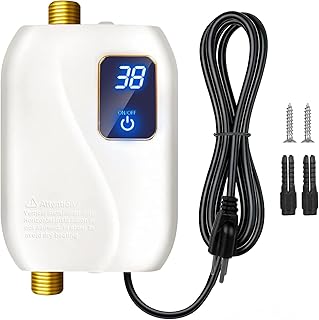
This 3000W electric tankless unit uses stainless steel and ABS with an LED display. It can raise water temperature quickly (82° F at 0.3 GPM to 131° F at 0.5 GPM) and supports Fahrenheit or Celsius readouts. It’s designed for on-demand use without preheating, making it suitable for compact spaces like kitchens or bathrooms where only limited hot water is needed. Best for single-point use or small apartments. A key caveat: not intended for shower loads where higher flow is required. ETL standard qualification adds safety reassurance.
Best for: small apartments, under-sink hot water needs, and spaces where instant hot water saves time. Limitations: limited flow makes it less ideal for simultaneous multi-point use like showers.
Ranein Propane Gas Tankless, 3.6 GPM

Powered by 80,000 BTU, this gas-powered tankless heater delivers up to 3.6 GPM and supports 2-3 water points at once. Temperature is adjustable between 95°F and 149°F to reduce hot-cold swings, making it safer for families with kids or seniors. It emphasizes energy savings and quieter operation through dual heating chambers and optimized combustion. This unit is best for homes needing continuous hot water at multiple taps. A potential limitation is venting and gas line requirements, which must be arranged during installation.
Best for: homes needing reliable multi-point hot water. Limitations: installation complexity due to gas venting and connections.
Tankless Electric 3000W With Digital Display

This 3000W electric tankless heater provides quick on-demand hot water with a clear LED display and a Fahrenheit/Celsius toggle. It’s a compact, wall-mounted unit designed for kitchens, apartments, or camping setups where space is at a premium. Not suited for shower-duty due to lower flow rates, but excellent for sinks and limited hot-water points. It shares the same compact philosophy as the under-sink option but is marketed for broader space-saving needs.
Best for: space-saving installations in kitchens or RVs. Limitations: not appropriate for high-flow showers or multi-point use.
Rheem RTG Series 7.0 GPM Natural Gas Tankless

Rheem RTG Series delivers 7.0 GPM at up to 160,000 BTUs, designed for indoor use and continuous hot water. It’s positioned for homes requiring dependable supply for multiple outlets, typical of two or three bathroom configurations. The non-condensing design emphasizes robust flow without complex controls. Choose this if your home’s demand exceeds single-point needs and you require steady temperature despite fluctuating usage. A caveat: gas line sizing and venting must be properly installed.
Best for: small to mid-size homes needing reliable multi-point hot water. Limitations: requires proper venting and gas connections.
Thermomate 27kW Tankless (240V)
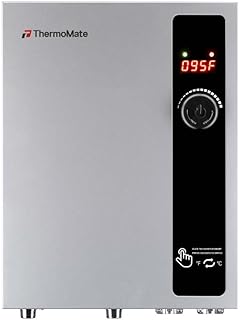
Thermomate’s 27kW unit operates at 240V and is built to handle residential demand with higher power. It’s designed for self-modulating energy savings and can draw substantial current (up to 114A). This makes it suitable for homes with higher simultaneous water use, such as larger families or guest suites. The product data supports strong performance at scale, but installation requires appropriate electrical service and professional setup to ensure safe operation and compliance.
Best for: larger homes with higher simultaneous hot-water needs. Limitations: high electrical load and installation requirements.
Buying Guide: Key Considerations For Hot Water Demand Systems
What capacity do you need? Calculate approximate GPM needs for your typical usage and choose a unit that meets or exceeds that flow rate at the desired temperature rise. For gas models, consider venting, gas line size, and clearance. For electric units, ensure your electrical service can handle the load and that you have appropriate wiring and circuit protection.
Where will you install it? Under-sink and compact wall-mounted models save space but may limit flow. For multi-point needs, a larger unit or multiple units may be required. Venting is a critical factor for gas units; improper venting can cause unsafe conditions.
How important is temperature control? Look for adjustable temperature ranges and stable remote readings. On-demand models with digital displays help monitor status and performance, especially in households with children or elderly residents.
What about efficiency and safety? Check thermal efficiency percentages and safety protections such as anti-leakage, dry-boil protection, and auto shutoff when overheating. For electric models, ensure ETL or equivalent certification where applicable.
Installation considerations and costs vary. Electric models need a suitable 110V or 240V circuit, plus space for mounting and access for maintenance. Gas models require venting, gas supply lines, and professional installation to comply with local codes.
FAQ
- What is a hot water demand system?
A system designed to heat water instantly as it’s used, rather than storing hot water in a tank, reducing wait times and saving space.
- Can I use a tankless heater for multiple fixtures at once?
Yes, but you need a unit sized for the required GPM to avoid temperature fluctuations when more than one faucet or shower runs simultaneously.
- Do electric tankless heaters work well in cold climates?
They can, but the temperature rise and flow rate depend on incoming water temperature. Higher flow may reduce performance in very cold water conditions.
- Is professional installation recommended?
Yes, especially for gas heaters or high-capacity electric units that require proper venting, electrical service upgrades, or building code compliance.
- How do I protect against leaks?
Choose units with built-in leak protection and install with proper shutoff valves, ensuring easy isolation for maintenance.
- What maintenance is needed?
Regular inspection of connections, venting (for gas models), and periodic performance checks can help maintain efficiency.