Answering the practical needs of homeowners and contract installers, this guide highlights reliable hydronic radiant heat thermostats suited for underfloor heating and radiant slabs. It compares basic non-programmable models, mid-range digital options, and advanced slab-sensing thermostats to help you choose the right fit for comfort, safety, and energy efficiency. The top picks are best for: DIY homeowners seeking simple control, professional installers needing robust sensors, and homes with radiant floor systems requiring reliable ambient and floor temperature management.
| Product | Best For | Key Strength |
|---|---|---|
| Azel D-508F | Hydronic radiant floor systems | Dual ambient and floor temperature display |
| Honeywell TH1100DV1000 Pro-Digital | Simple, reliable heat-only control | Backlit display and easy temperature readouts |
| Programmable Bowsen Thermostat | Underfloor radiant heating with self-adapt features | AC volts compatibility and GFCI safety |
| Honeywell TL7235A1003 | Line-voltage, basic digital control | On-demand backlight and clear indicators |
| Google Nest Thermostat | Smart home integration | Energy-saving features and compatibility checks |
Azel D-508F Non-Programmable Digital Slab Sensor Thermostat

The Azel D-508F is a non-programmable digital thermostat designed for hydronic radiant floor heating. It supports 24VAC power and provides a backlit, multi-display that shows ambient and floor sensor readings along with the setpoint. This model offers three temperature modes (ambient, floor, and a combined ambient-floor control) to help protect floor coverings while maintaining comfortable temperatures. It’s best for homes that want direct, two-sensor visibility without complex programming. A potential limitation is the lack of advanced scheduling features for users seeking daily temperature routines.
Honeywell TH1100DV1000 Pro-Digital 2-Wire Heat Only

This two-wire, heat-only thermostat from Honeywell is designed for straightforward radiant or boiler-based heating systems. It features a standard 40 to 90°F temperature scale and a backlit display for easy reading in any lighting. The device continuously displays the ambient temperature, helping users quickly verify current conditions. It’s best for buyers who want a reliable, easy-to-read thermostat with simple setup and no programming requirements. A limitation is the lack of built-in scheduling or advanced energy controls.
BOWSEN Programmable Thermostat For Radiant Underfloor Heating
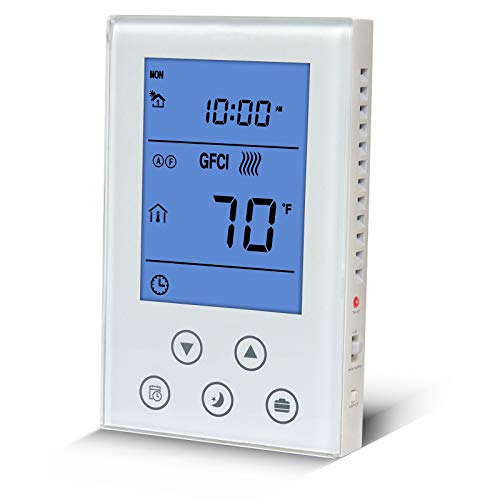
Designed for underfloor radiant heating, the Bowsen thermostat handles 120/240VAC with a maximum 3600W load, and includes a floor and air sensor plus built-in GFCI. The dual-sensing capability helps maintain comfort while protecting floor coverings. It’s best for installations requiring robust safety features and the flexibility to handle higher wattage. A potential caveat is the more complex wiring and setup compared with basic models, so professional installation is advised for some setups.
Honeywell TL7235A1003 Line Volt Pro Digital Thermostat

This line-voltage, non-programmable digital thermostat provides straightforward electronic temperature control for radiant floor systems. It includes an on-demand backlight for reading in varied lighting and a visual heating indicator. It’s best for projects prioritizing a simple, durable control with clear status cues. A limitation is the absence of programming capabilities or advanced energy-saving features.
Honeywell TH1100DV1000/U Pro 1000 Vertical Non-Programmable Thermostat

The TH1100DV1000/U is a high-profile, vertical non-programmable thermostat from Honeywell. It emphasizes form factor with a large, visually simple interface and a white Premier finish. It’s best for installations requiring easy visibility and a straightforward control surface in residential settings. A limitation is the absence of scheduling or adaptive features for energy optimization.
Google Nest Thermostat

The Nest Thermostat provides smart home compatibility with energy-saving features and remote control via Wi‑Fi. It works with many hydronic radiant setups, particularly when a C wire or power accessory is available. It’s best for tech-forward homes seeking automation, remote management, and potential energy savings. A limitation is that compatibility depends on the heating system, and some radiant systems may require additional adapters or wiring work.
Buying Guide: Key Considerations For Hydronic Radiant Heat Thermostats
- System Type and Power: Confirm whether your radiant system is low-voltage, line-voltage, or requires 24VAC control. Match the thermostat’s power requirement to avoid wiring issues and ensure safe operation.
- Temperature Sensing: Dual ambient and floor sensors help prevent floor damage while delivering comfortable warmth. Decide if you need single-sensing or dual-sensing control based on floor type and room use.
- Programming And Scheduling: Programmable models save energy by adjusting temps automatically. Consider a model with daily and weekly schedules or opt for a non-programmable unit for simplicity.
- Safety Features: GFCI integration, especially in underfloor installations, reduces shock risk. Look for built-in protection if installing in wet or damp spaces.
- Display And Usability: Backlit displays aid readability in dark rooms. Large interfaces improve ease of use for frequent temperature adjustments.
- Smart Home Compatibility: If you want remote access or voice control, consider a smart thermostat. Check compatibility with your heating system and home network.
- Installation And Wiring: Some units require professional wiring, particularly line-voltage or 240V systems. Review installation guides and local electrical codes before purchasing.
- Warranty And Support: Choose brands offering solid customer support and clear warranty terms to reduce risk on complex radiant installations.
Frequently Asked Questions
- What is a hydronic radiant heat thermostat?
A thermostat that controls radiant heating systems using water-filled tubes embedded in floors or slabs, regulating temperature via ambient or floor-sensor feedback. - Do I need dual sensors for radiant floors?
Dual sensors (ambient and floor) help prevent overheating of floors while keeping the space comfortable, especially on radiant systems with sensitive floor coverings. - Can I use a smart thermostat with radiant floors?
Yes, many smart thermostats work with radiant systems, but some setups may require a C wire or compatible power accessory for reliable operation. - Is programmable better than non-programmable for radiant heat?
Programmable models can save energy by scheduling temperature changes, but non-programmable units offer simplicity and reliability in some installations. - What installation considerations matter most?
Ensure voltage compatibility, sensor placement, and electrical code compliance. For higher-wattage or line-voltage systems, professional wiring is often required. - How do I protect floors with radiant heating thermostats?
Use a thermostat that supports floor sensing and set appropriate floor temperature limits to protect coverings while maintaining comfort.