Heat-powered stove fans use heat from a stove to circulate warm air without batteries or household electricity. The Tomersun six-blade model is best for buyers who want a stated operating-temperature range; its eight-blade model is better for shoppers seeking a bracket and thermometer. JossaColar includes a magnetic thermometer, VODA focuses on simple heat-powered circulation, and the Miaton model lists a low operating-noise claim and overload protection.
| Product | Best For | Notable Listed Feature |
|---|---|---|
| Tomersun Six-Blade Fan | Temperature-range guidance | Six blades and thermometer |
| Tomersun Eight-Blade Fan | Buyers wanting a bracket | Eight blades and thermometer |
| JossaColar Fan | Buyers wanting a compact listed size | Magnetic thermometer |
| VODA Fan | Simple heat-powered circulation | No batteries or electricity required |
| Miaton Six-Blade Fan | Quiet-operation and safety features | Under-25-decibel claim and overload protection |
Tomersun Six-Blade Heat-Powered Stove Fan

Best for: Buyers who want a multi-blade design and temperature guidance for a wood, coal, or pellet-burning appliance. The Tomersun model uses six blades and is designed to circulate warm air produced by the stove or fireplace. It needs no batteries or electrical connection, according to the product description.
The listing gives several temperature figures: it says the fan starts running at about 158°F, identifies an operating range of 185°F to 660°F, and describes 482°F to 572°F as its most efficient range. It also says to remove the fan if the stove surface exceeds 660°F. Follow the product’s instructions and monitor the stove surface rather than assuming every stove reaches the same conditions.
Why it was selected: The stated temperature guidance makes this option easier to compare with models that do not provide a specific operating range. The listing claims fuel savings of 28%, but that is a manufacturer claim, not a guaranteed result for every stove or room.
Limitation: Buyers should check that the stove’s surface temperature falls within the fan’s stated range. A heat-powered fan’s operation depends on the heat available at its base.
Tomersun Eight-Blade Fan With Bracket

Best for: Buyers who want an eight-blade fan, a mounting bracket, and a magnetic thermometer in the package. The listing describes this thermoelectric fan as intended for most flat-top wood stoves and fireplaces. The bracket is presented as a way to attach the fan to a stove, so shoppers should verify that the setup suits their appliance before purchase.
The product description says the eight-blade design moves 40% more warm air than standard four-blade models. This is a listing claim and should not be treated as a measured result for every room. The fan also has bottom spring plates that the description says bend and lift the fan to reduce heat contact if temperatures become too high.
The included magnetic thermometer is intended to help monitor stove-surface temperature. The listing recommends an ideal range of 390°F to 480°F and says to avoid temperatures above 570°F.
Why it was selected: It combines a higher blade count with an included bracket and temperature-monitoring accessory, which may suit buyers who prioritize those features.
Limitation: Its stated temperature guidance is specific; buyers should confirm their stove surface stays within the recommended range. The bracket does not establish compatibility with every stove shape.
JossaColar Heat-Powered Stove Fan

Best for: Buyers who want a heat-powered fan with a magnetic thermometer and a stated compact footprint. JossaColar says the fan needs no batteries and is designed for wood-burning stoves, log burners, and fireplaces. Its curved aluminum fan blade is described as an upgraded design intended to spread heat around the room.
The listing gives dimensions of 6.5 inches long and 7.7 inches high. These figures can help shoppers compare the fan’s size with available space on a stove top. The package includes a magnetic thermometer, which can help users monitor stove temperature, although the provided product information does not state a specific operating-temperature range.
Why it was selected: The listed size and included thermometer give buyers two practical details to consider, while its no-battery design matches the main purpose of heat-powered stove fans.
Limitation: The product details do not provide an operating-temperature range or a specific compatibility list beyond wood stoves, log burners, and fireplaces. Check the stove’s available flat surface and use the included thermometer as directed.
VODA Heat-Powered Fireplace Fan
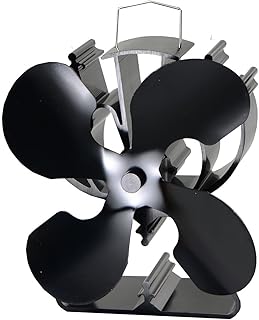
Best for: Buyers looking for a straightforward fan that uses stove heat instead of batteries or household electricity. VODA describes its fan as working from heat on the stovetop and circulating warm air around the room. Its product information notes that efficiency may vary with stove temperature.
A stove fan can help move warm air away from the area immediately around a stove, where heat can otherwise be unevenly distributed. The VODA listing specifically describes the goal as reducing hot and cold spots through warm-air circulation. It also claims that using the fan can reduce wood consumption by 28%; actual fuel use depends on the stove, fuel, room, and operating conditions, so this figure should not be assumed as a guaranteed saving.
Why it was selected: The product description clearly states its basic operating principle and intended use: heat-powered circulation without an electrical supply. That makes it a direct option for shoppers comparing simple, non-electric stove fans.
Limitation: The listing does not provide a temperature range, blade count, included thermometer, or dimensions in the supplied details. Buyers who need those specifications should verify them before choosing.
Miaton Six-Blade Fan With Overheat Protection

Best for: Buyers who prioritize listed safety features and a low-noise claim. The Miaton fan has six blades and is described as converting stove heat into electricity to run without a power outlet. Its listing says it can be used with wood-burning stoves, pellet stoves, and portable heaters, including buddy heaters.
The product description identifies anodized aluminum construction and a built-in high-temperature overload device. It says the base mechanism reduces contact with the stove when temperature exceeds 350°C. The listing also states that operating sound remains below 25 decibels. These are claims from the product information, not independent test results.
The product details say an aluminum tray is not included. Buyers should account for that if they expected a tray as part of the package. As with other heat-powered fans, the fan’s operation depends on heat at the base, and users should follow the manufacturer’s safety instructions.
Why it was selected: It offers specific material, noise, and overheat-protection details, making it a useful comparison for shoppers who care about those features as well as non-electric operation.
Limitation: The listing does not provide a recommended normal operating-temperature range, and the aluminum tray is not included.
Buying Guide: How to Choose a Heat-Powered Stove Fan
Heat-powered stove fans sit on or attach to a hot stove and use temperature differences to generate electricity for the fan motor. They do not require batteries or a wall outlet, but they also do not create heat. Their purpose is to move warm air that the stove has already produced. Choose by matching the fan’s design and stated limits to the stove, room, and way you plan to use it.
Does the fan fit your stove and available space?
Check the stove surface before comparing blade counts. A fan needs a suitable place to sit or attach, and the product information may specify a flat-top stove, a bracket, or particular appliance types. The Tomersun eight-blade listing describes use with most flat-top wood stoves and fireplaces and includes a bracket. JossaColar provides dimensions of 6.5 inches long and 7.7 inches high. The other supplied listings do not give comparable dimensions.
Do not assume that a general description such as “fireplace fan” guarantees a fit on every fireplace or stove. Check the manufacturer’s instructions and the shape, temperature, and usable surface area of your appliance. Keep the fan clear of areas where it could be knocked over or obstruct normal stove operation.
Why does the operating-temperature range matter?
A heat-powered fan needs sufficient warmth at its base to operate, but excessive heat can damage components. Temperature guidance helps you determine whether a particular model suits the stove. Tomersun’s six-blade model gives a stated operating range and removal limit. Its eight-blade model recommends 390°F to 480°F and says to avoid temperatures above 570°F. JossaColar includes a magnetic thermometer, but its supplied details do not specify a fan temperature range.
Use a stove thermometer to monitor surface conditions if you need temperature information. Do not treat a fan’s overheat feature as a replacement for safe stove operation or for following the product instructions. Temperature readings can vary by location on a stove, so follow the manufacturer’s guidance about where to place the fan.
Should you choose more blades?
Blade count is one feature, not a complete measure of performance. The six-blade Tomersun listing says its design moves more air than a four-blade model. The eight-blade Tomersun listing claims 40% more warm-air movement than standard four-blade models. These are product claims; they do not establish the airflow you will get in your particular room. Compare blade design alongside temperature range, size, mounting method, and any included accessories.
Also consider the room layout. A fan circulates air around the stove area, but its effect can depend on the room’s size, openings, furniture, and stove output. A fan is not a substitute for selecting an appropriately sized heating appliance or following safe heating practices.
Which accessories are useful?
- Thermometer: JossaColar and both Tomersun listings include a thermometer according to their product details. It can help you monitor stove surface temperature.
- Bracket: The Tomersun eight-blade model includes a bracket. Check the attachment instructions and whether your stove setup is suitable.
- Tray: The Miaton listing specifically says an aluminum tray is not included. Confirm package contents if a tray matters to your setup.
- Listed dimensions: JossaColar provides a length and height, which are useful when checking available space.
Are fuel-saving claims guaranteed?
No. Some listings claim that their fans can reduce wood use by 28%, and one describes lower fuel consumption as a benefit. Those figures are product claims, not a guarantee for every household. Results may depend on the stove, fuel, room layout, operating habits, and other conditions. Compare the products using verifiable specifications such as dimensions, included accessories, temperature guidance, and mounting style instead of relying on an advertised savings percentage alone.
What should you prioritize for a power outage?
All five products are described as heat-powered or non-electric, so they do not require a household electrical connection to run as intended. That makes this category relevant to buyers who want air circulation without plugging in a fan. The Miaton listing explicitly mentions use during a power outage. A heat-powered stove fan still depends on a sufficiently hot stove surface; it does not operate when the stove is cold.
Frequently Asked Questions
Do heat-powered stove fans need electricity?
No. The products in this guide are described as heat-powered and do not require batteries or household electricity. They use heat from the stove to operate.
Do stove fans produce heat?
No. A stove fan moves warm air generated by the stove; it does not create additional heat. Its purpose is to help circulate existing warmth around a room.
Can I use one on any stove?
Not necessarily. Check the product’s stated appliance types, surface requirements, dimensions, and temperature guidance. Some listings describe use with wood stoves, pellet stoves, fireplaces, or flat-top stoves, but that does not confirm compatibility with every appliance.
How do I know if a stove fan is too hot?
Follow the product’s temperature instructions and monitor the stove surface with a thermometer when appropriate. The Tomersun models provide specific temperature guidance, while other listings in this guide do not state a complete operating range.
Does a six- or eight-blade fan always move more air?
Not necessarily. Blade count alone does not prove real-world airflow. Compare the manufacturer’s stated specifications and claims, and account for stove temperature, fan placement, and room layout.
Will a heat-powered fan reduce my wood use?
It may help distribute warm air, but fuel savings are not guaranteed. Product listings make savings claims, yet actual results depend on the stove, room, fuel, and how the heating system is operated.