Answering the need for instant hot water without a bulky storage tank, these tankless hot water systems deliver heat on demand and can save energy when used correctly. They suit different buyers: homeowners seeking whole‑home supply, renters needing compact units, and RV or apartment dwellers prioritizing space efficiency. The top picks below highlight strong options for reliability, ease of installation, and hot water consistency. A quick comparison table of selected products is provided to help shoppers decide at a glance.
| Product | Best For | Key Benefit | Notes |
|---|---|---|---|
| Waterdrop KJ600 | Under-sink or compact homes | Integrated RO filtration with hot water | Includes heating in RO system |
| NVRZQWD Tankless HU | Low-profile, point‑of‑use | Digital display, 110V plug‑in | Best for small spaces |
| DAORDAER 110V Tankless | Remote control lovers | Remote or touch control, 55°C max | Compact with smart controls |
| APUS 27kW 240V | Whole‑home capacity | Up to 6.5 GPM, memory function | Requires proper electrical install |
| WINTEMP 27kW | Residential showers | Self‑modulating, LED display | High efficiency, requires adequate service |
Waterdrop KJ600 Reverse Osmosis System With Heating

The Waterdrop KJ600 combines reverse osmosis filtration with instant hot water capability. This system provides hot water in the range of 104℉–203℉ and includes a 5‑stage filtration process to reduce contaminants such as TDS, PFAS, fluoride, and heavy metals. Best for buyers who want a compact under‑sink unit that also handles hot water for cooking, tea, and beverages. Note that external factors like room temperature and cup temperature can influence the final hot water temperature.
- Best for households needing both purified and heated water from a single under‑sink unit.
- Choice of hot water temperature enables quick beverages and meals.
- Requires normal under‑sink installation and electrical access.
NVRZQWD Tankless Water Heater Electric 110V

The NVRZQWD mini tankless electric heater is a compact under‑sink solution delivering instant hot water with a 0.3–0.5 GPM range and temperatures from 82°F to 131°F. It’s wall‑mounted, space‑saving, and includes LCD display with intelligent status checks and safety protections. Best for small kitchens, apartments, RVs, or camping setups where space is at a premium. Limitation: flow and temperature depend on water demand and cold inlet temperatures, so expect lower temps at higher flow rates.
- Best for point‑of‑use heating in tight spaces.
- Simplified 110V plug‑in installation.
- Consider water flow needs to prevent temperature drop.
DAORDAER Electric Tankless Water Heater

The DAORDAER unit offers instant hot water with a 3000W heating system and a remote or touch‑screen control. It supports constant temperature output with three power settings and is designed for compact spaces, making it suitable for kitchens or bathrooms where space is limited. Best for users who want remote or touch controls and a compact footprint. Caution: maximum temperature is capped at 131°F, so extremely hot water may not be feasible for some uses.
- Best for users who value remote access and modern controls.
- Space‑efficient wall mount with multi‑control options.
- Check local regulations on 110V installations and wire sizing.
APUS 27kW 240V Tankless Water Heater
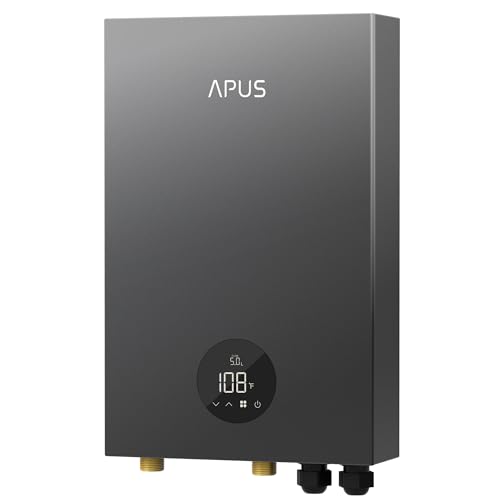
The APUS 27kW model is designed for whole‑home on‑demand hot water with up to 6.5 GPM. It features smart controls, memory function, and self‑modulating technology to optimize energy use. Best for households needing multiple simultaneous hot water uses with a compact footprint. This unit requires careful electrical planning (240V, multiple circuit breakers, appropriate wiring) to ensure safe operation.
- Best for whole‑home heating with higher GPM needs.
- Memory function reduces re‑programming after power cycles.
- Ensure electrical service can support 27kW load.
WINTEMP 27kW 240V Tankless Water Heater

The WINTEMP model emphasizes continuous hot water with self‑modulating energy use, aiming for stable temperatures and up to 6.5 GPM. It includes an LED display for temperature monitoring and Wi‑Fi readiness for smart control. Best for homes seeking energy efficiency and predictable hot water delivery. Caution: high‑amperage electrical installation is required; verify service capacity before purchasing.
- Best for stable temperatures and energy savings in moderate climates.
- Self‑modulating tech adapts to water flow and temperature needs.
- Requires a robust electrical supply and professional installation.
Buying Guide: Tankless Hot Water System Essentials
What should you consider before buying a tankless hot water system?
- Flow rate (GPM): Match the unit’s maximum GPM to your household needs, considering showers, sinks, and appliances used simultaneously.
- Electrical requirements: Many high‑capacity models require dedicated circuits and professional installation. Check service capacity and wiring standards.
- Temperature range: Look for precise control (±1°F or similar) and memory functions if you want consistent temperatures across cycles.
- Space and installation: Determine whether you need a whole‑home system or a point‑of‑use unit in a compact area.
- Maintenance needs: Some systems benefit from inline kits or flush accessories to sustain performance over time.
- Water quality: Consider pre‑filtration if your supply has high TDS or minerals that could affect performance.
- Safety features: Look for dry‑run protection, leak protection, and overload safeguards to prevent damage.
Frequently Asked Questions
- What size tankless heater do I need for a family home? — Choose a unit with sufficient GPM to cover simultaneous uses, often in the 4–6 GPM range for typical multi‑outlet needs, but verify with a load calculation.
- Do I need professional installation for tankless systems? — Yes for most high‑capacity models due to electrical and plumbing considerations; some 110V or under‑sink units may be DIY‑friendly.
- Can tankless water heaters provide hot water for showers and appliances at the same time? — Yes, if the unit’s GPM rating and your water pressure meet demand; undersized systems may result in temperature drops.
- Are there safety risks with tankless heaters? — Look for overload protection, dry‑run protection, and proper venting or electrical compliance to minimize risks.
- Do tankless systems save energy? — They typically use less energy than storage tanks because they heat water only on demand, though actual savings depend on usage patterns.
- Can tankless heaters work with well water or hard water? — They can, but mineral scaling may reduce efficiency; consider appropriate filtration or regular maintenance.