When choosing heat protection gear for construction projects, prioritize materials that withstand high temperatures, reflect or insulate effectively, and are easy to install. This guide features five top choices best for different tasks: heavy welding and flame work, exhaust and pipe heat management, quick DIY heating jobs, and flexible, reusable heat shielding. Each pick is explained with who it’s best for, plus handy pros and limits to help you decide fast.
Comparison Of Chosen Products
| Product | Best For | Key Benefit | Limitations |
|---|---|---|---|
| FLASLD Aluminized Heat Shield Mat | Welding and high-heat shielding | Withstands temperatures above 2000°F and reflects 95% of radiant heat | Tape-like backing can require trimming for fit |
| NEZUIBAN 2″ x 50FT Titanium Exhaust Wrap | Exhaust systems and turbo manifolds | Withstands 1800°F direct heat; reduces under-hood heat | Fiberglass-based; inspect for fraying over time |
| SEEKONE Mini Heat Gun | DIY projects and crafts | Two temp settings up to 842°F; compact and safe | Limited power for heavy industrial tasks |
| FLASLD 9×12in Heat Shield Blanket | Welding and workshop protection | Carbon felt with high temp resistance up to 1800°F | Thick blanket may be bulky for tight spaces |
| Design Engineering Cool-Tape | Automotive and industrial heat shielding | Up to 2000°F radiant heat resistance; easy self-adhesive | Single-layer tape may need reinforcing on sharp bends |
FLASLD Aluminized Heat Shield Mat 12″ x 24″
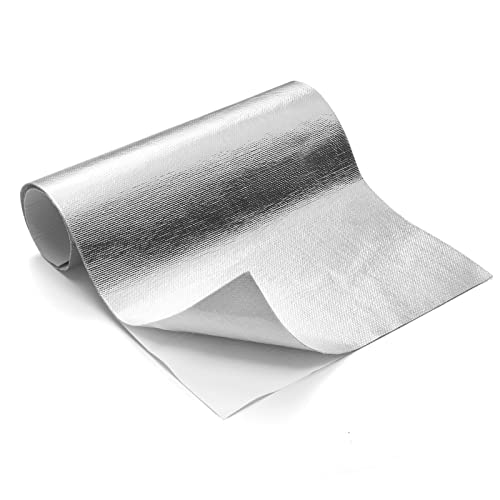
Product overview: An aluminized, adhesive-backed heat barrier crafted from woven silica. It resists temperatures beyond 2000°F and reflects up to 95% of radiant heat. Available in multiple sizes, including 12 x 24 inches, with a 0.032″ thickness. This makes it suitable for shaping around equipment or components in high-heat zones.
Who it’s best for: Contractors engaged in welding, metal fabrication, or any site requiring a flexible, high-heat shield that can be trimmed to fit irregular surfaces. It is particularly useful when projects demand rapid coverage with minimal installation tools.
Why selected: Its combination of extreme heat tolerance, high heat reflection, and flexible sizing offers durable protection for critical surfaces in demanding environments. The backing aids quick installation without mechanical fasteners.
Caution: The backing material can be sensitive to bending at very small radii; plan cuts and folds to avoid cracking the reflective surface.
NEZUIBAN 2″ x 16FT Exhaust Heat Wrap

Product overview: Fiberglass yarn exhaust wrap designed to insulate headers and exhausts. It withstands 1400°F continuous heat and 2000°F intermittent heat. The wrap is intended for motorcycles, automotive turbos, and other high-heat lines, and includes stainless steel locking ties for secure installation.
Who it’s best for: Mechanics, hobbyists, and builders tackling vehicle exhaust work or durable heat protection near hot pipes where radiant heat reduction improves component life and performance.
Why selected: It provides strong insulation and a distinctive carbon-fiber look while offering high heat resistance and practical application in tight spaces.
Caution: Ensure proper chafing protection and periodic check for fiber wear along bends; rewrap as needed over time.
SEEKONE Mini Heat Gun

Product overview: A compact heat gun with dual temperature settings of 500°F (260°C) and 842°F (450°C). It includes a reflector nozzle, a long cable, and overheat protection for safe operation. The design emphasizes ergonomic use for crafts, vinyl work, and shrink-tubing tasks.
Who it’s best for: DIY enthusiasts and small workshop tasks requiring precise, controlled heat application in tight spaces.
Why selected: Its dual-temperature capability and safety features suit a broad range of non-industrial heat shaping tasks, offering portability and ease of use.
Caution: Not intended for heavy industrial heating; avoid continuous use at the highest setting on large surfaces.
FLASLD 9×12in Heat Shield Blanket

Product overview: A carbon felt heat shield blanket designed for welding areas, stoves, and DIY burners. It offers high-temperature resistance up to 1800°F and is described as soft, tear-resistant, and flexible enough to wrap around objects.
Who it’s best for: Welders, metalworkers, and DIY hobbyists needing a soft yet protective barrier for tables, equipment, or around work areas.
Why selected: The blanket form allows broad coverage in a single piece, reducing gaps where heat can radiate.
Caution: The 6 mm thickness may make it feel bulky for very tight spaces; plan wrapping strategy accordingly.
Design Engineering Cool-Tape

Product overview: Self-adhesive, high-temperature reflective tape designed to shield components from radiant heat up to 2000°F. The roll measures 1.5″ by 15′ and features a aluminized layer bonded to a glass fiber backing for durability and flexibility.
Who it’s best for: Automotive technicians and industrial workers needing quick, durable heat-shielding around hot components without tools.
Why selected: The self-adhesive backing accelerates installation and reduces downtime when applying near hot surfaces.
Caution: Tape should not be stretched over sharp edges; corners may require additional backing or reinforcement for long-term use.
Buying Guide: Key Purchase Considerations
Heat protection gear must match the specific task, surface, and temperature exposure. Consider these questions to refine your choice:
- What maximum temperature will the surface or component experience? Choose materials rated above that level for a safety margin.
- Is the goal insulation, reflection, or a combination? Reflective shields reduce radiant heat, while blankets and wraps provide barrier insulation.
- Is the installation temporary or recurring? Self-adhesive tapes and pre-cut blankets offer quick, repeatable use; heavier shields require cutting and fastening.
- What shape and space constraints exist? Flexible mats and wraps conform to curved surfaces better than rigid sheets.
- Will exposure involve flames, sparks, or slag? Fireproof or flame-retardant materials with tear resistance are preferable for welding and metalwork.
- How will durability be measured? Look for material thickness, backing integrity, and resistance to abrasion and chemical exposure.
- Maintenance and reusability: Some products are easily removed and re-applied, while others are better suited for static installations.
Additional Perspectives
- For frequent construction sites with variable heat tasks, a combination approach—heat shields for critical zones and tape for quick patches—offers flexibility and speed.
- When working near moving parts or electrical components, ensure the material does not interfere with operation or insulation integrity.
- Always follow manufacturer installation guidelines to maximize protection and minimize risk of failure under heat exposure.
Frequently Asked Questions
- What is the best heat shield material for welding near flammable materials? A high-temperature reflective or carbon-felt shield with a durable backing is recommended to resist sparks and radiant heat.
- Can heat wrap reduce engine bay temperatures effectively? Yes, properly installed exhaust wraps can lower under-hood temperatures by limiting radiant heat transfer.
- Are aluminized tapes suitable for long-term outdoor use? They can be, but verify UV resistance and environmental exposure ratings for outdoor projects.
- How do I trim heat shields to fit irregular surfaces? Use metal shears or scissors designed for heat shielding, and fit with minimal folds to prevent cracking.
- Is a heat gun safe for DIY insulation tasks? Yes, with proper heat settings and distance from the target, and by using protective gear and ventilation.
- When should I replace heat protection components? If the surface shows signs of cracking, tearing, or reduced reflective capacity, replacement is advisable.