The best propane heater for an enclosed trailer depends on whether it is approved for the exact space and can be installed or operated with safe venting. A direct-vent model is the clearest option here for a permanent wall installation; portable Buddy heaters offer adjustable radiant heat, while ventless models require careful attention to their instructions and ventilation. No product listing alone confirms that a heater is safe for every enclosed trailer. Check the heater manual, trailer requirements, and local rules before use.
| Product | Best suited for | Key detail |
|---|---|---|
| Comfort Glow 11,000 BTU Direct Vent | Permanent installation where direct venting is suitable | Thermostatic control; heats up to 350 sq. ft. |
| Mr. Heater 9,000 BTU Buddy | Portable, lower-output radiant heat | 4,000 or 9,000 BTU; up to 225 sq. ft. |
| Mr. Heater 18,000 BTU Big Buddy | Higher output and multiple heat settings | 4,000, 9,000, or 18,000 BTU |
| ProCom 10,000 BTU Infrared Plaque | Manual operation without electricity | Two settings and an oxygen depletion sensor |
| ProCom 20,000 BTU Blue Flame | Higher-output thermostat-controlled heating | Three thermostat settings; up to 950 sq. ft. |
Comfort Glow 11,000 BTU Direct Vent Heater
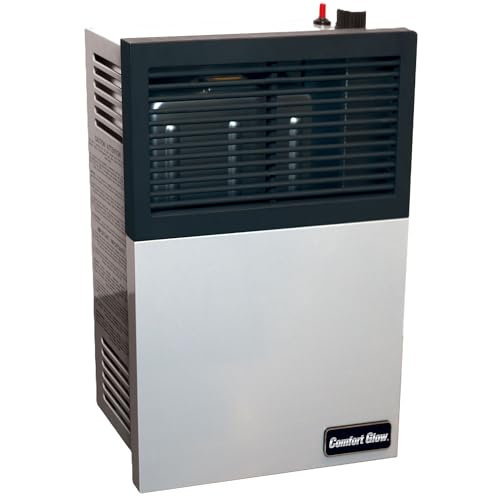
Best for: Buyers considering a fixed heater installation who can provide the required direct-vent opening and follow the manufacturer’s installation instructions. It is the only listed option specifically described as a direct-vent wall heater.
This propane heater has an 11,000 BTU output and a thermostat. The listing says it can heat up to 350 square feet. Its sealed burn system, electronic ignition, and safety pilot with a built-in pressure regulator are listed safety features. The heater measures 20 inches high, 17 inches wide, and 7 inches deep.
Why it was selected: Direct venting makes it more relevant to a permanent enclosed-space installation than the ventless models in this guide. However, the product details do not establish that it is approved for a particular trailer. Confirm that the trailer structure and installation location meet all requirements before buying.
Limitation: It needs a wall installation and a suitable vent path, so it is not a portable heater. Do not install it in a trailer unless its manual and applicable rules allow that specific use.
Mr. Heater 9,000 BTU Portable Buddy
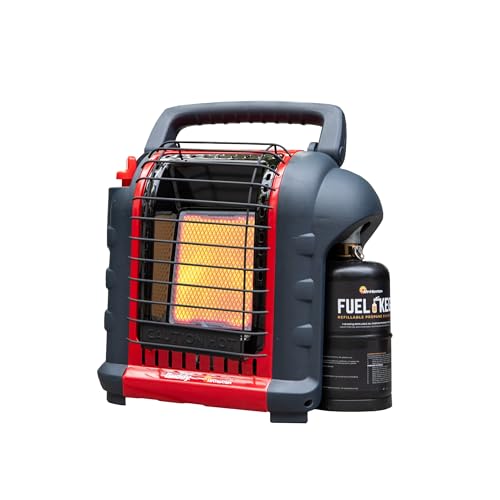
Best for: Buyers who want portable radiant heat and a lower maximum output than an 18,000 BTU model. The heater offers 4,000- and 9,000-BTU settings and is listed for spaces up to approximately 225 square feet.
The product is described as designed and approved for indoor and outdoor use. That description does not automatically mean it is approved for use inside an enclosed trailer. Trailer size, ventilation, heater clearances, and the exact operating instructions still matter.
Why it was selected: Its two output levels give buyers a choice between lower and higher heat, and its portable format may suit temporary heating needs better than a wall-mounted unit.
Limitation: The supplied product features do not specify a trailer-use approval or a direct-vent system. Avoid using it in an enclosed trailer unless the heater instructions explicitly permit the setup and required safety measures are in place.
Mr. Heater 18,000 BTU Big Buddy
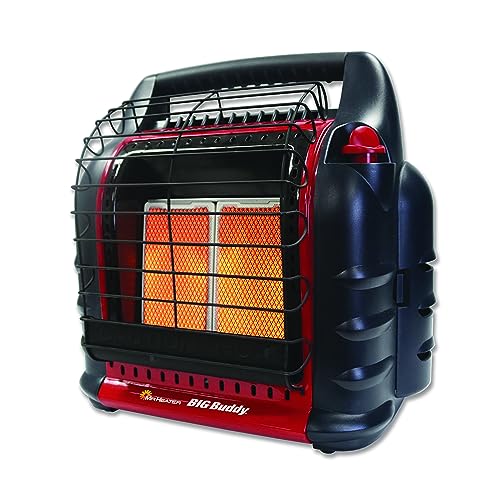
Best for: Buyers comparing portable heaters with several heat levels and a higher maximum output. The Big Buddy provides low, medium, and high settings of 4,000, 9,000, and 18,000 BTU and is listed to heat up to 450 square feet.
The listing says the heater can run for up to 216 hours on two 20-pound propane tanks at the low setting, using an optional hose. Actual run time can vary with operating conditions, and the optional hose is not included in the listed feature description.
Why it was selected: Its three settings make it easier to compare lower-output operation with higher heat output. It may be worth considering when the intended space needs more capacity than a 9,000-BTU portable model can provide.
Limitation: A larger BTU rating does not make a heater suitable for an enclosed trailer. Check the manual for permitted locations, tank or hose setup, clearance, and ventilation requirements before use.
ProCom 10,000 BTU Manual Plaque Heater

Best for: Buyers comparing a compact propane heater with manual controls and no electrical power requirement. This infrared plaque model has low and high heat settings, push-button piezo ignition, and a listed maximum output of 10,000 BTU.
The listing says it heats up to 500 square feet and includes an oxygen depletion sensor with automatic shutoff. The product is specified for propane only. An oxygen depletion sensor is not a substitute for following ventilation instructions, using a carbon monoxide alarm, or checking whether the heater is allowed in a trailer.
Why it was selected: Its lower maximum output and simple two-setting control make it a useful comparison against the higher-output options. It does not require electricity, according to the product information.
Limitation: It is described as ventless, so it does not exhaust combustion gases through a direct-vent system. Do not choose it for a closed trailer unless the manufacturer’s instructions and local requirements explicitly allow that use.
ProCom 20,000 BTU Blue Flame Heater

Best for: Buyers comparing a higher-output propane heater with thermostat control. The listing gives a maximum output of 20,000 BTU, three control levels—high, medium, and low—and a stated heating area of up to 950 square feet.
The model is described as a ventless blue flame heater. It can be mounted on a wall with included hardware or placed on the floor using included base feet. The product features describe it for residential rooms, not specifically enclosed trailers.
Why it was selected: Its output and thermostat settings provide a useful comparison for buyers deciding whether a smaller heater’s capacity is enough. The wall-mount and floor-placement options also offer different installation formats.
Limitation: It is a ventless model with a maximum output higher than the other listed ProCom heater. Do not assume the large stated coverage area makes it appropriate for a trailer; verify the required room size, ventilation, and approved-use instructions.
Buying Guide: Choosing a Propane Heater For An Enclosed Trailer
Is a propane heater safe to use inside an enclosed trailer?
It depends on the exact heater, trailer, and installation. A product described as suitable for indoor use is not necessarily approved for a small enclosed trailer, sleeping area, or vehicle. Read the full manual for permitted locations, ventilation, clearances, fuel connection, and operating instructions. Follow local fire and building rules, and contact the manufacturer if trailer use is not clearly addressed.
Combustion heaters can create carbon monoxide, an odorless and potentially deadly gas. Use a working carbon monoxide alarm as an added safeguard, not as permission to operate a heater contrary to its instructions. Never ignore a carbon monoxide alarm or signs of illness; leave the area and seek help.
Should I choose a direct-vent or ventless model?
A direct-vent heater is designed to exhaust through a vent rather than release combustion products into the room as a ventless design does. The Comfort Glow model is the only direct-vent product among these five. It requires a suitable wall installation, and its listing does not confirm trailer approval. Ventless models may be easier to place, but they still require the exact ventilation and use conditions stated by the manufacturer.
How much heater output does my trailer need?
Do not choose by square-foot coverage alone. Trailer insulation, air leaks, ceiling height, outdoor temperature, and the amount of door opening affect heating needs. The listed coverage figures are product claims, not a guarantee of performance in a trailer. Compare the BTU settings and consult a qualified installer if the trailer’s heating requirement is uncertain.
- For a lower maximum output, compare the 9,000-BTU Buddy and 10,000-BTU ProCom plaque models.
- For more heat settings, compare the Buddy’s 4,000- and 9,000-BTU levels with the Big Buddy’s 4,000-, 9,000-, and 18,000-BTU levels.
- For a fixed vented installation, review the Comfort Glow’s installation specifications and required venting.
Do I need electricity to run the heater?
The ProCom manual plaque model is described as operating without electricity and using push-button piezo ignition. The other listed product details do not provide enough information to compare all electrical requirements. Check each manual for ignition, controls, and any accessories that need power.
What installation and fuel details should I check?
Confirm the approved propane supply, regulator and hose requirements, clearances from walls and objects, mounting surface, and whether a cylinder may be stored or connected inside the trailer. Do not assume a heater accepts a particular tank arrangement unless its instructions say so. For a permanent installation, use a qualified professional when required and keep the vent clear and properly installed.
- Measure the available space and compare it with the heater’s dimensions and clearance instructions.
- Check that the heater’s listed fuel type matches the intended propane supply.
- Verify the manufacturer’s rules for operation while occupants are sleeping or when the trailer is unattended.
- Keep combustible items away and follow the manual’s location and ventilation directions.
Frequently Asked Questions
What is the best type of propane heater for an enclosed trailer?
A correctly installed direct-vent model may be a more appropriate starting point for a fixed installation because it has an exhaust vent. Confirm that the specific heater is approved for the trailer and follow its manual. No heater in this list is identified in the supplied details as specifically approved for enclosed-trailer use.
Can I use a ventless propane heater in a trailer?
Only if the manufacturer’s instructions and applicable rules permit that exact use and the required ventilation conditions can be met. A ventless heater releases combustion products into the space, so do not treat an oxygen depletion sensor as a replacement for proper ventilation or a carbon monoxide alarm.
Is a higher-BTU heater always better?
No. A higher output may be excessive for a small or well-insulated trailer and does not resolve ventilation or installation concerns. Match output to the actual space and conditions, using the manufacturer’s guidance rather than coverage figures alone.
Does “indoor use” mean a heater is approved for a trailer?
No. Indoor-use wording does not automatically cover enclosed trailers, vehicles, or sleeping spaces. Check the specific manual and ask the manufacturer if the intended use is unclear.
What safety equipment should I have?
Follow the heater and trailer instructions for required safety equipment and ventilation. A working carbon monoxide alarm is an important additional safeguard, but it does not make an otherwise prohibited installation safe. Keep exits accessible and leave the trailer immediately if an alarm sounds or anyone feels unwell.