The best fit among these options for a mushroom incubation setup is the BN-LINK seedling heat mat with thermostat: it is designed for plant propagation and offers an adjustable controller. The other four products are reptile heat mats, so they may suit small, carefully monitored setups but are not mushroom-specific. Match the controller’s range to the temperature required by your mushroom species, and monitor conditions inside the incubation space.
| Product | Best suited for | Key consideration |
|---|---|---|
| BN-LINK Seedling Heat Mat | Growers seeking adjustable warmth for propagation or incubation experiments | Controller range is 40–108°F |
| Aiicioo 8 x 12-Inch Thermostat Combo | Those needing a larger reptile-style mat and included control | Listed for glass terrariums, not plastic or acrylic |
| VIVOSUN 6 x 8-Inch Thermostat Combo | Small setups needing a compact mat and controller | Temperature control range is 40–108°F |
| Aiicioo 16-Watt Heat Pad | Users considering a larger mat without a listed thermostat | Read instructions and monitor heat separately |
| Aiicioo 8-Watt Thermostat Combo | Small terrarium-style setups where lower listed wattage is preferred | Not recommended for plastic, acrylic, or water tanks |
BN-LINK Seedling Heat Mat With Thermostat
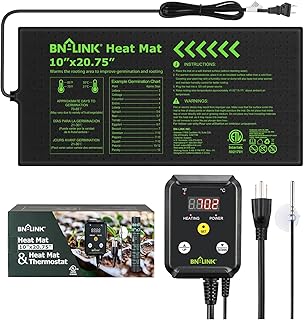
Best for: Growers who want a propagation-style mat with an adjustable thermostat for a small incubation project. Its 10-by-20.75-inch size provides a broader warming surface than the compact terrarium mats in this list.
The mat is designed for seed starting and cutting propagation. The product information describes consistent, uniform heating around 70–85°F and a waterproof, multilayer PVC construction with an IP67 rating. Its controller has a three-button interface, an LED display, and an adjustable 40–108°F range with Fahrenheit and Celsius settings.
Why it was selected: Of these five options, it is the clearest match for a grower looking for a propagation heat mat and adjustable temperature control. The broad controller range can accommodate different targets, but it does not determine the correct incubation temperature for a particular mushroom species.
Limitation: The listed 70–85°F mat operating description is not a substitute for measuring conditions in the actual incubation area. Follow the mushroom culture’s temperature guidance and monitor for unwanted heat buildup.
Aiicioo 16-Watt Mat With Thermostat

Best for: Users who need a larger reptile-style heat mat with a thermostat included and are building a setup around a suitable glass enclosure. The mat measures 8 by 12 inches, uses 16 watts, and is listed for a 30–40-gallon terrarium.
Aiicioo describes the mat as waterproof, with upgraded adhesive and optional bottom or side mounting. A digital thermostat is included, with a stated display range of 32–140°F. The product information says the mat can produce steady heat between 104°F and 122°F; this describes the heater, not a recommended mushroom incubation temperature.
Why it was selected: Its larger surface and included thermostat make it a more controllable option than a basic mat, provided the enclosure and installation are appropriate. It may be useful for a carefully monitored experimental setup where the target temperature is compatible with the control equipment.
Limitation: The manufacturer advises against using it on plastic, acrylic, and water tanks. This is a reptile terrarium product, not a mushroom incubator, so do not assume its mat temperature is suitable for cultures.
VIVOSUN Compact Reptile Heat Mat
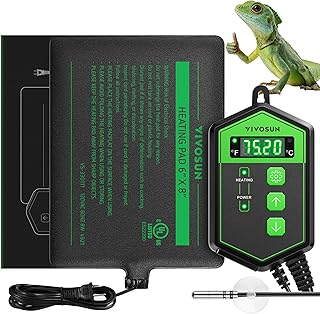
Best for: A small setup where a compact mat and thermostat are priorities. The mat measures 6 by 8 inches and is supplied with a digital thermostat, making it easier to set and monitor than a heater without a listed controller.
The product features include a water-tight IP67-rated surface, far-infrared heating technology, and bottom or side mounting with adhesive. Its thermostat control range is 40–108°F, while the stated display range is 32–210°F. The product information also says the pad can reach about 104°F and that the controller is designed for North American outlets.
Why it was selected: It is the smallest thermostat-equipped option here, which may better suit a compact enclosure than a large propagation mat. Its control range overlaps many possible setpoints, but buyers should confirm the required temperature for their specific culture.
Limitation: The small surface may not warm a larger enclosure evenly. The listed temperature ranges describe the product and controller, not a guarantee of uniform conditions throughout a mushroom incubator.
Aiicioo 16-Watt Reptile Heating Pad

Best for: Buyers considering a larger 8-by-12-inch heating surface for a terrarium-style setup. The mat is rated at 16 watts and 120 volts, and the product listing recommends it for a 30–40-gallon terrarium.
Aiicioo says the pad can produce steady heat between 104°F and 122°F and can be mounted on the bottom or side of a terrarium. Rubber feet are included for bottom mounting to elevate the enclosure slightly and allow excess heat to escape. The product information describes it as suitable for reptile, amphibian, small-animal, or plant terrariums.
Why it was selected: Its larger footprint may be relevant when comparing coverage needs, and its mounting options offer setup flexibility. It is a possible candidate only when the user can independently manage and monitor temperature safely.
Limitation: The supplied product details do not list a thermostat with this model. For mushroom incubation, an uncontrolled heat source can make it difficult to maintain a suitable temperature, so use temperature monitoring and appropriate control rather than relying on the pad alone.
Aiicioo 8-Watt Mat With Thermostat

Best for: Buyers seeking a smaller, lower-wattage reptile mat with a thermostat included. It measures 6 by 8 inches and is rated at 8 watts, making it the lowest-wattage option among the listed products.
The product information says it can produce steady heat between 104°F and 122°F. Its digital thermostat has a stated display range of 32–140°F. The mat can be mounted on the bottom or side of a terrarium, and rubber feet are included for bottom mounting so the enclosure can be slightly elevated.
Why it was selected: Its compact size and included thermostat may suit a small setup where a larger mat is unnecessary. Compare its controller and mat specifications with the target conditions and enclosure size before choosing it.
Limitation: Aiicioo advises against using the heater on plastic, acrylic, and water tanks. The listed heating range is not a mushroom-specific setting, so monitor the conditions around the culture instead of assuming the mat’s output is appropriate.
Buying Guide: Choosing a Mushroom Incubator Heating Pad
What temperature does your mushroom species need?
Start with the recommended incubation conditions for the specific mushroom strain and culture you are growing. There is no single temperature that applies to every mushroom. Check the supplier’s instructions or reliable cultivation guidance, then select a heater and controller that can maintain the required range.
Do not use a heater’s maximum surface or output temperature as the target for a culture. In this product list, several reptile mats are described as reaching 104–122°F, while the BN-LINK controller is adjustable from 40–108°F. Those are product specifications, not universal mushroom-growing recommendations.
Is a thermostat included?
A thermostat can help control heating based on a set temperature. The BN-LINK mat and three Aiicioo or VIVOSUN combo products include a controller according to their listings. The Aiicioo 16-watt mat without “thermostat” in its product name does not list one among the supplied features.
Before purchase, verify what the controller measures and how it should be positioned. The supplied descriptions do not fully explain sensor placement for mushroom incubation. Follow the product instructions, and use a separate thermometer to check conditions inside the incubation space if needed.
How large is the heated area?
Match the mat’s dimensions to the enclosure and the amount of material you plan to warm. The BN-LINK mat is 10 by 20.75 inches. The Aiicioo 16-watt models are 8 by 12 inches, while the VIVOSUN and Aiicioo 8-watt models are 6 by 8 inches.
A larger mat is not automatically better. An undersized mat may leave parts of an enclosure cooler, while excessive or poorly controlled heat can create uneven conditions. Consider the layout and monitor more than one area when uniformity matters.
Can a reptile heat mat work in a mushroom incubator?
These reptile products are not presented as mushroom incubator heaters. They may be considered only if their specifications, installation instructions, and temperature-control method fit the intended setup. The BN-LINK mat is designed for seed starting and propagation, making it the most directly relevant product category in this group, though it is not labeled specifically for mushrooms either.
Check enclosure material restrictions. For example, the Aiicioo thermostat models listed here warn against use with plastic and acrylic tanks; the 16-watt combo also lists water tanks as unsuitable. Follow the exact product instructions rather than assuming a mat is safe for any enclosure.
How should you compare wattage and control range?
Wattage indicates electrical power, but it does not by itself establish the temperature a culture will experience. The listed options range from 8 watts to 16 watts, and their dimensions differ. Consider wattage alongside mat area, controller range, enclosure setup, and measured conditions.
Compare controller ranges only after determining your target temperature. The BN-LINK controller and VIVOSUN thermostat are listed with adjustable ranges of 40–108°F. The Aiicioo thermostat models describe a display range, but the supplied information does not specify an adjustable control range for those models. Confirm details in the product instructions.
What safety and maintenance details matter?
Install the mat only as directed, and keep the enclosure material and mounting method within the product’s stated limits. Some listed mats are waterproof or have water-resistant surfaces, but that does not mean every setup or electrical connection is safe to expose to moisture. Do not infer additional waterproofing or safety features beyond the listing.
Check temperatures regularly, keep the mat and controller in good condition, and stop using equipment that appears damaged. If a mat is mounted beneath an enclosure, consider the manufacturer’s directions about airflow and clearance. Do not leave a heat source uncontrolled in a setup where heat could rise above the culture’s appropriate range.
Frequently Asked Questions
Which listed heating pad is the best starting point for mushroom incubation?
The BN-LINK seedling heat mat is the most relevant starting point because it is designed for plant propagation and includes an adjustable 40–108°F thermostat. Confirm that its range suits your mushroom species and monitor the actual incubation conditions.
Are reptile heat mats designed for growing mushrooms?
No. The Aiicioo and VIVOSUN products listed here are reptile heating mats. Their specifications may help with comparison, but the listings do not identify them as mushroom incubator heaters.
Do I need a thermostat for an incubator heating pad?
A thermostat can help regulate temperature, which is useful when a steady target matters. Choose a controller with a range appropriate for your culture and follow its instructions. The product information supplied here does not establish that every controller works the same way.
Can I use these mats with a plastic incubation chamber?
Check the exact product instructions before using any mat with plastic. The Aiicioo thermostat models specifically advise against use on plastic and acrylic tanks. Do not assume other mats are compatible unless their instructions say so.
Does a higher-wattage mat incubate mushrooms faster?
Not necessarily. Wattage is only one product specification and does not prove that a mat will maintain the right temperature or improve incubation speed. Select based on the required temperature, enclosure size, control method, and measured conditions.
What temperature should I set for mushroom incubation?
The appropriate temperature depends on the mushroom species and strain. Use the culture supplier’s instructions or species-specific cultivation guidance rather than selecting a setpoint from a heater’s maximum temperature.