The best thermostatic radiator control depends on whether you need a replacement head, a complete water valve, or a particular pipe connection. The two-head packs are best for buyers seeking adjustable radiator heads with stated anti-freeze protection. The DN15 brass valve is better for a 15 mm connection, while the DN20 options suit buyers comparing automatic temperature control and adjustment features. Check the existing valve type, connection, and heating-system requirements before ordering; the product details do not establish universal compatibility.
| Product | Best for | Key listed feature |
|---|---|---|
| Two-pack thermostatic radiator heads | Replacing or adding heads | Anti-freeze protection and adjustment |
| DN15 brass thermostatic valve | Buyers checking for a 15 mm connection | Brass construction and one-way flow |
| G1/2-inch and G3/4-inch control valve | Buyers comparing connection sizes | Liquid sensor and frost protection |
| DN20 thermostatic valve | Buyers wanting numbered adjustment | Five-position temperature setting |
| Two-pack radiator heads, alternate listing | Buyers needing two control heads | Adjustment function and anti-freeze protection |
Two-Pack Thermostatic Radiator Heads

This listing is for two thermostatic radiator heads, rather than a complete radiator valve assembly. The product details describe an adjustment function and anti-freeze protection for a heating system. They also state that the heads are made from materials intended to resist deformation or damage during ordinary use, although no specific material is named.
Best for: Buyers who need two heads and have confirmed that the heads fit their existing valve bodies. The two-piece package may be convenient when more than one radiator needs a replacement head.
Why it was selected: It offers a clear two-head quantity and includes the anti-freeze and adjustment functions sought by some home or office heating buyers.
Limitation: The supplied details do not identify a thread standard, valve-body compatibility, or exact dimensions. Check the product image and measurements against the installed valve before choosing it; a head alone may not replace a complete valve.
DN15 Brass Thermostatic Valve

This product is a thermostatic water valve with a stated standard 15 mm DN15 BSP threaded connection. Its body is described as brass with corrosion-resistant properties. The listing also specifies a one-way flow design, which is intended to control flow direction and prevent backflow.
Best for: Buyers whose heating-system specifications call for the listed DN15 connection and one-way flow. The stated brass body may be relevant for shoppers comparing construction materials for a radiator or towel warmer installation.
Why it was selected: Compared with the head-only products, this listing describes a valve body and provides a connection size and flow-direction detail that buyers can check against their system.
Limitation: A listed 15 mm connection does not by itself guarantee that the valve fits every American heating system. Confirm the thread standard, connection arrangement, and flow direction required by the installation before purchase.
G1/2-Inch And G3/4-Inch Control Valve

This automatic temperature-control valve is described as having G1/2-inch and G3/4-inch connection options, a copper angle design, manual control, and a liquid thermostatic sensor. The sensor responds to temperature by adjusting the flow rate. The listing also identifies frost protection and describes the valve as designed for energy-efficient operation.
Best for: Buyers who need to compare the listed connection sizes and want an automatic valve with a liquid sensor. The temperature-responsive flow control is a relevant feature for shoppers seeking regulation rather than a basic manual shutoff.
Why it was selected: Its listed sensor, manual control, frost-protection feature, and two connection-size references give buyers several specific points to verify against their system.
Limitation: The product name also refers to DN20, so buyers should verify the exact supplied connection and configuration before ordering. The listing does not provide a temperature range or detailed installation instructions in the supplied information.
DN20 Valve With Five-Position Adjustment
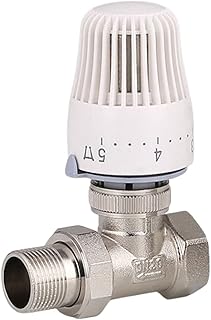
This 3/4-inch DN20 thermostatic valve is described as a straight-type, bidirectional two-way valve body with a brass interface. Its handle has settings marked 0 through 5. The product details say the valve senses water temperature and opens or closes to regulate the return-water temperature in a radiator or floor-heating circuit.
Best for: Buyers whose system calls for the stated DN20 size and who prefer a numbered adjustment scale. The zero setting is identified as the shutoff position in the supplied product description.
Why it was selected: The numbered settings and stated bidirectional design make it easier to compare with valves that provide less detail about adjustment or flow arrangement.
Limitation: The product information does not give specific temperature values for settings 0–5. Do not assume that a particular number corresponds to a particular room or water temperature.
Alternate Two-Pack Radiator Heads
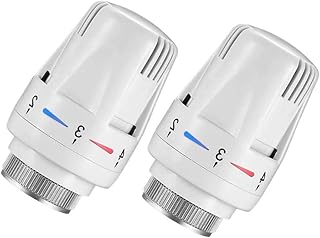
This listing also includes two thermostatic radiator heads. The supplied features describe an adjustment function and anti-freeze protection, along with materials presented as practical and resistant to deformation or damage. As with the other head-only option, the listing does not identify a complete valve body.
Best for: Buyers comparing two-head packs who have already checked the dimensions and fit required for their installed valve bodies. It may be useful when two radiators need control heads rather than complete valves.
Why it was selected: It provides a second two-piece option with the same core stated functions, allowing shoppers to compare the listing and product image before selecting a replacement head.
Limitation: The supplied product details do not establish a connection standard or compatibility with a particular valve brand. Confirm fit before ordering, and do not treat this head pack as a complete valve replacement.
Buying Guide: How To Choose A Thermostatic Radiator Valve
Do you need a control head or a complete valve?
Start by identifying which part needs replacement. A thermostatic head adjusts a compatible valve body; it is not necessarily a complete water valve. A complete valve listing describes the body that connects to the heating pipe. Replacing only a head can be the simpler choice when the existing valve body is serviceable and the replacement head fits it. If the valve body itself is damaged or unsuitable, a head-only pack will not address that need.
Check the product description, photographs, and measurements to distinguish these categories. The two-pack listings here are heads. The DN15 and DN20 products are described as valves. Do not use the number of items in a package as a substitute for checking what each item is.
Which connection size and thread should you verify?
Match the valve’s stated connection to the actual pipe and fitting requirements of the heating system. The listings use terms such as DN15, DN20, G1/2-inch, G3/4-inch, and 15 mm BSP. These labels are not interchangeable descriptions of every possible fitting. Confirm the connection standard and size with the system documentation or a qualified installer when uncertain.
Also check the valve orientation and installation arrangement. The DN15 listing specifies one-way flow, while the DN20 listing describes a bidirectional two-way body. Flow direction and valve layout can affect whether a component is suitable for a particular installation.
Is an automatic sensor or a manual setting more important?
An automatic thermostatic valve uses a sensing element to adjust flow in response to temperature. The G1/2-inch and G3/4-inch listing describes a liquid sensor, and the DN20 listing describes temperature sensing with automatic opening and closing. These details can help shoppers compare how a product is intended to regulate heating.
A numbered handle gives the user a direct adjustment interface, but the numbers do not necessarily state exact temperatures. For the DN20 product, the supplied details list settings 0 through 5 and identify zero as the off position. They do not specify the temperature represented by each other number.
What does anti-freeze protection mean in these listings?
Anti-freeze protection is a stated feature of both two-head products, and frost protection is listed for the G1/2-inch and G3/4-inch valve. These descriptions may matter to buyers comparing control options for cold conditions. However, the supplied product information does not explain activation temperatures, operating limits, or how the feature behaves in every heating system.
Do not treat a frost-protection label as a replacement for suitable building protection or system maintenance. Review full product documentation and consider the needs of the property and heating system before relying on this function.
What should you compare for durability and maintenance?
The DN15 valve is described as having a brass body with corrosion-resistant properties. The DN20 valve listing refers to a brass interface, while the two head listings use general material descriptions without naming a specific material. Compare the level of material detail rather than assuming every product has the same construction.
Consider whether you are replacing one part or several, whether the product’s adjustment method suits the room, and whether its connection and flow design match the installation. If information such as dimensions, temperature range, or included fittings is missing, confirm it with the seller or an installer before buying.
Frequently Asked Questions
What is a thermostatic radiator valve?
A thermostatic radiator valve regulates water flow through a heating component in response to temperature. A thermostatic head operates with a compatible valve body; a complete valve includes the body that connects to the system.
Are thermostatic radiator heads and valves the same thing?
No. A head is the control component fitted to a compatible valve body. A valve listing describes the body and may include temperature-control features. Check the package contents and product description to confirm which part is included.
Can I use a DN15 valve on any 15 mm pipe?
Not necessarily. The DN15 listing specifies a 15 mm DN15 BSP threaded connection, but buyers should confirm the actual thread, fitting, and system requirements. A nominal size alone does not prove compatibility.
What is the difference between DN15 and DN20?
DN15 and DN20 identify different nominal valve sizes in the product listings. The DN15 product specifies a 15 mm connection, while the DN20 products are described as 3/4-inch. Verify the connection standard and installation details rather than relying on the labels alone.
Do the numbered settings show exact temperatures?
Not in the supplied details. The DN20 valve has a 0–5 adjustment scale, but the listing does not provide exact temperature values for those settings. Treat the numbers as adjustment positions unless the product documentation says otherwise.
Should I replace the valve body or only the head?
Replace only the head when the existing valve body is suitable and the new head is confirmed to fit. A complete valve may be needed if the body requires replacement, but installation requirements vary. Check compatibility and seek qualified help when the system connection or flow arrangement is unclear.